

If you are a business owner looking into SEO, one of the first questions you will ask is simple:
How much does SEO cost in Australia?
The honest answer is that SEO pricing can vary dramatically. Some providers charge a few hundred dollars per month. Some agencies charge several thousand. Larger SEO campaigns for competitive industries can go well beyond that.
But the better question is not just:
How much does SEO cost?
The better question is:
What level of SEO investment is actually enough to improve rankings, attract qualified traffic and generate enquiries?
That is where many businesses get caught. They compare SEO packages by price without understanding the amount of work needed to compete. A cheap package can look attractive upfront, but if it does not improve your website, content, technical health, local visibility or authority, it is not really saving money. It is delaying growth.
This guide breaks down how SEO pricing works in Australia, what affects the cost, and how much businesses should realistically spend if they want SEO to become a serious growth channel.
How SEO Pricing Works
SEO is usually priced in one of four ways:
| Pricing Model | How It Works | Best For |
|---|---|---|
| Monthly retainer | You pay a fixed monthly fee for ongoing SEO work | Most businesses |
| Hourly consulting | You pay for expert time by the hour | Audits, advice, training |
| Project-based SEO | You pay for a defined project or deliverable | Technical audits, migrations, one-off fixes |
| Performance-based SEO | Payment is linked to agreed outcomes | Less common and often risky |
For most small and medium businesses, SEO is usually handled through a monthly retainer because SEO is not a one-time task. It requires ongoing technical improvements, content development, internal linking, reporting, competitor analysis and optimisation.
Google’s own SEO guidance explains that SEO is about helping search engines understand your content and helping users find your site through search. That means SEO needs to cover both technical discoverability and useful content, not just keywords on a page.
So, How Much Does SEO Cost in Australia?
As a rough guide, Australian SEO services often fall into these ranges:
| Monthly SEO Budget | Best For | What To Expect |
|---|---|---|
| $500 to $1,000 | Very small businesses or basic maintenance | Limited work, light optimisation, slower growth |
| $1,000 to $2,500 | Local businesses starting SEO properly | Foundational SEO, local SEO, on-page improvements |
| $2,500 to $5,000 | Competitive local and service businesses | Stronger strategy, content, technical work and reporting |
| $5,000 to $10,000+ | Competitive industries, ecommerce and multi-location businesses | More aggressive SEO, content production, technical depth and authority building |
For many Australian small businesses, a realistic SEO starting point is usually somewhere between $1,000 and $2,500 per month.
For more competitive industries, especially in Sydney, Melbourne, Brisbane and national ecommerce markets, $2,500 to $5,000+ per month is often more realistic.
That does not mean every business needs to spend that amount immediately. But if the budget is too low compared with the competition, the campaign may not have enough resources to move the needle.
Why SEO Costs Vary So Much
SEO pricing depends on the amount of work needed to get your website from where it is now to where it needs to be.
A small local business with a simple website and low competition may not need the same investment as a national ecommerce brand, a legal firm, a finance company or a multi-location service business.
The main cost factors include:
- website size
- website technical condition
- competition level
- target locations
- number of services or products
- content gaps
- backlink profile
- local SEO strength
- website speed and structure
- existing rankings
- quality of current pages
- reporting and strategy requirements
SEO is not just one activity. It is a combination of technical, content, local and authority-building work.
What Should Be Included In SEO?
A proper SEO campaign should include more than just adding keywords to a page.
At minimum, your SEO investment should cover:
Technical SEO
Technical SEO helps search engines crawl, index and understand your website.
This can include:
- sitemap checks
- indexing reviews
- crawl error fixes
- site speed improvements
- mobile usability checks
- redirects
- canonical tags
- structured data
- internal linking issues
- broken page clean-up
If Google cannot properly crawl or understand your website, content alone will not fix the problem.
Keyword Research
Good SEO starts with understanding how your customers search.
Keyword research should identify:
- service keywords
- product keywords
- local keywords
- commercial intent keywords
- informational topics
- competitor keyword gaps
- long-tail search opportunities
The goal is not to chase every keyword. The goal is to map the right keywords to the right pages.
On-Page SEO
On-page SEO improves the relevance and usefulness of your website pages.
This includes:
- SEO titles
- meta descriptions
- headings
- page structure
- content improvements
- image optimisation
- internal links
- calls to action
- FAQ sections
- location relevance
- topical depth
A service page should not just mention a keyword. It should answer the questions a buyer has before they enquire.
Local SEO
For service businesses, local SEO is one of the most important parts of the campaign.
Local SEO can include:
- Google Business Profile optimisation
- local landing pages
- service area targeting
- local citations
- review strategy
- suburb relevance
- local content
- local backlinks
- NAP consistency
If your business serves Sydney, Brisbane, Melbourne or specific suburbs, your SEO strategy should reflect that.
Content Strategy
Content helps build topical authority.
A strong content strategy should support your money pages by answering related questions.
For example, an SEO agency page can be supported by articles such as:
- SEO Cost Australia
- How Long Does SEO Take?
- Local SEO Sydney Guide
- SEO vs Google Ads
- Technical SEO Checklist
- Why Your Website Is Not Ranking
The mistake is publishing random blog posts with no connection to the commercial pages. Every article should have a role in the broader SEO architecture.
Internal Linking
Internal links help users and search engines understand the structure of your website.
A good SEO campaign should identify which pages need more internal support and which anchor text should be used.
For example, an article about SEO pricing should naturally link to your SEO service page using relevant anchor text such as SEO agency in Sydney or SEO services for Australian businesses.
Reporting
SEO reporting should show more than keyword rankings.
Good reporting should include:
- organic traffic
- organic enquiries
- ranking movement
- indexed pages
- technical issues
- content performance
- local visibility
- conversions where possible
- work completed
- next actions
Rankings matter, but they are not the whole story. A keyword ranking is only valuable if it supports qualified traffic and business outcomes.
Is Cheap SEO Worth It?
Sometimes cheap SEO is fine for very basic maintenance. But cheap SEO is rarely enough for serious growth.
The issue is not only the price. The issue is what can realistically be delivered within that price.
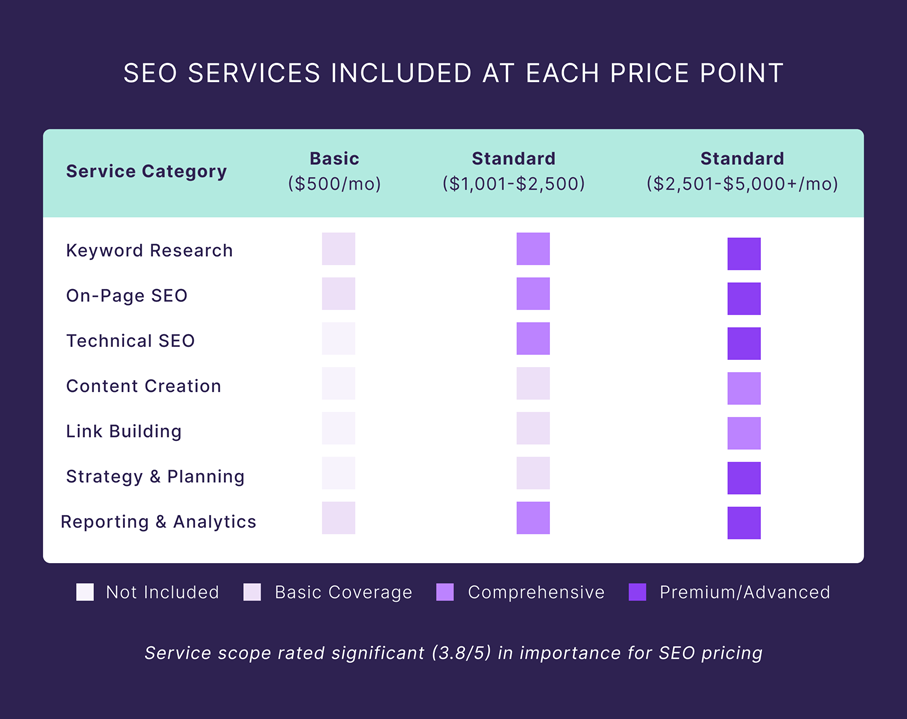
If an SEO provider charges $300 per month, there may not be enough time to do proper research, technical checks, content improvement, reporting, local SEO and strategy.
Low-cost SEO can also lead to risky shortcuts, such as:
- thin AI-generated content
- spammy backlinks
- duplicated suburb pages
- keyword stuffing
- no technical work
- automated reports with no insight
- no real strategy
- no commercial understanding
The danger is not just poor results. In some cases, bad SEO can create clean-up work later.
Is Expensive SEO Always Better?
No.
A higher price does not automatically mean better SEO.
Some expensive agencies still provide generic reports, slow implementation and vague strategy. Some smaller SEO providers deliver excellent work because they are more hands-on.
The price matters, but the scope matters more.
Before judging an SEO proposal, ask:
- What work will be done each month?
- Who is actually doing the work?
- How are priorities decided?
- Is technical SEO included?
- Is content strategy included?
- Are service pages being improved?
- Is local SEO included?
- Are backlinks included or separate?
- What metrics will be reported?
- How will enquiries be tracked?
- What does success look like after 3, 6 and 12 months?
A good SEO proposal should make the work clear.
How Much Should Local Businesses Spend On SEO?
For local service businesses, a realistic SEO budget often starts around $1,000 to $2,500 per month.
This may suit businesses such as:
- plumbers
- electricians
- mechanics
- builders
- pest control companies
- cleaning businesses
- allied health providers
- consultants
- local professional services
At this level, the SEO work should usually focus on:
- technical clean-up
- service page optimisation
- local keyword targeting
- Google Business Profile alignment
- local content
- internal linking
- basic authority building
- reporting
If the business is in a competitive city or industry, the budget may need to be higher.
How Much Should Professional Services Spend On SEO?
Professional services often need a stronger SEO investment because the competition is higher and the value of a lead is often greater.
This includes:
- legal services
- migration services
- finance
- accounting
- consulting
- medical services
- education providers
- B2B services
A realistic budget may sit between $2,500 and $5,000+ per month, depending on competition and growth goals.
For these businesses, SEO needs to build trust as well as rankings. The content must demonstrate expertise, answer buyer questions and make the business look credible before someone enquires.
How Much Should Ecommerce Businesses Spend On SEO?
Ecommerce SEO is usually more complex because the site may include product pages, category pages, filters, product feeds, technical issues and larger content requirements.
A small ecommerce brand may start around $2,000 to $5,000 per month.
A larger ecommerce business may need $5,000 to $10,000+ per month if it is competing nationally or managing a large product catalogue.
Ecommerce SEO may include:
- category page optimisation
- product page improvements
- technical crawl management
- duplicate content clean-up
- schema
- internal linking
- collection page strategy
- content hubs
- product-led blog content
- conversion improvements
The goal is not just traffic. The goal is profitable organic revenue.
SEO Cost vs SEO Value
The value of SEO depends on what organic visibility is worth to your business.
For example, if SEO helps a business generate 20 extra enquiries per month and the business closes 5 of them, the value could be significant.
But if the campaign only reports traffic with no commercial tracking, it becomes harder to understand the return.
This is why SEO should be connected to business outcomes.
You should know:
- which pages generate traffic
- which pages generate enquiries
- which keywords support commercial intent
- which content supports service pages
- which technical issues are blocking growth
- what is being improved each month
SEO should not feel mysterious.
How Long Before SEO Starts Working?
SEO is not instant.
Some technical fixes can be implemented quickly. Some pages may improve within weeks. But meaningful SEO growth usually takes months, especially in competitive markets.
A realistic timeline often looks like this:
| Timeframe | What Usually Happens |
|---|---|
| Month 1 | Audit, technical fixes, keyword research, page mapping |
| Months 2 to 3 | Service page optimisation, content improvements, internal linking |
| Months 3 to 6 | Ranking movement, more impressions, early traffic growth |
| Months 6 to 12 | Stronger authority, better rankings, more consistent organic enquiries |
This timeline is not guaranteed. It depends on competition, website history, implementation speed and content quality.
But it is important to understand that SEO compounds. The work you do now can keep creating value months later.
What Budget Should You Start With?
If you are unsure where to start, use this simple guide:
| Business Situation | Suggested SEO Budget |
|---|---|
| Small local business with low competition | $1,000 to $1,500 per month |
| Local business in a competitive city | $1,500 to $3,000 per month |
| Professional services business | $2,500 to $5,000+ per month |
| Ecommerce business | $2,000 to $10,000+ per month |
| National or multi-location brand | $5,000 to $15,000+ per month |
The right budget depends on your goals.
If you only need foundational SEO, you may not need a large monthly campaign.
If you want to compete for high-value keywords in Sydney, Melbourne, Brisbane or national search results, you need a stronger investment.
The Biggest SEO Pricing Mistake
The biggest mistake is buying SEO like a commodity.
Many businesses compare SEO packages by price alone:
- Package A: $500 per month
- Package B: $1,500 per month
- Package C: $3,000 per month
But the real question is:
What work is actually being done, and is it enough to compete?
A cheaper package may look better until you realise it does not include content, technical SEO, local SEO, internal linking, proper reporting or strategic implementation.
SEO is not valuable because someone sends a monthly report. SEO is valuable when the work improves your ability to be found, trusted and chosen.
How To Choose The Right SEO Investment
Before choosing an SEO provider, look for clarity.
A good SEO partner should explain:
- what is wrong with your current website
- what opportunities exist
- what pages need improvement
- what content needs to be created
- what technical issues need fixing
- how local SEO will be handled
- how results will be tracked
- what will happen in the first 90 days
- what success looks like over 6 to 12 months
Be cautious of anyone who guarantees rankings. Search results are influenced by competition, algorithm changes, website quality, content, technical factors and external signals. No agency controls Google.
What a good agency can control is the quality of strategy, execution, measurement and ongoing optimisation.
Final Takeaway
SEO cost in Australia is different from Google Ads cost way and it can range from a few hundred dollars per month to several thousand dollars per month. But price alone does not tell you whether the campaign will work.
A good SEO investment should improve your website’s technical health, strengthen your content, support your service pages, build local visibility and help your business attract more qualified organic traffic over time.
For many businesses, a realistic starting point is around $1,000 to $2,500 per month. For competitive industries, professional services, ecommerce and multi-location businesses, the investment may need to be higher.
The goal is not to buy the cheapest SEO package.
The goal is to invest at the level required to compete, grow and generate commercial outcomes.
If you want to understand what SEO budget makes sense for your business, TABA Digital can review your website, competition, service areas and goals, then recommend an SEO strategy focused on rankings, traffic and measurable enquiry growth. Click here to submit a form